
Is the Short Manaslu Circuit Trek Suitable for Beginners? An Honest Guide
1st Oct, 2026
The Honest Answer: Yes, With Conditions
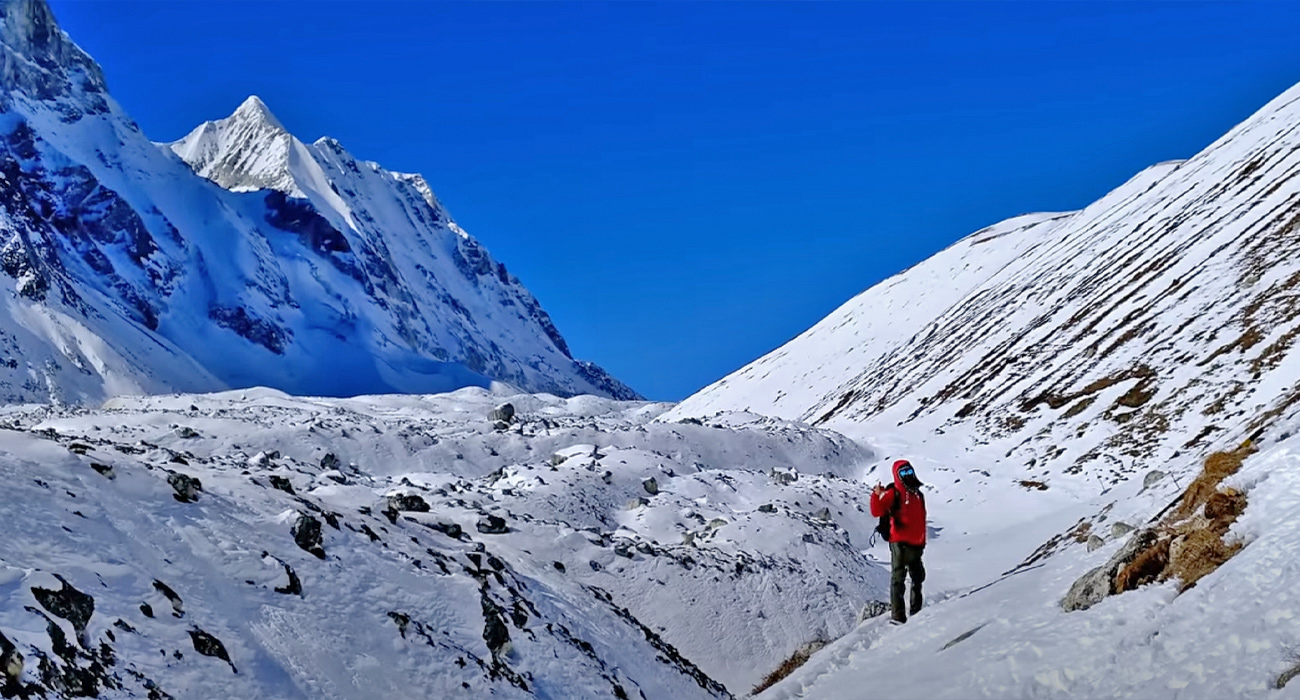
The Short Manaslu Circuit Trek is a spectacular 11-day journey around the world's eighth-highest mountain, Manaslu (8,163 m). It is a fully supported teahouse trek with no technical climbing, so in theory a determined beginner can do it. In practice, though, it is a demanding trek, and it is best suited to fit beginners who have some hiking experience and are ready to prepare properly.
Table of Contents
Mountain Eco Treks is open about this. Its trip page rates the trek as moderate to challenging and advises that it is not recommended for first-time high-altitude trekkers, so prior experience at altitude is strongly advisable. This guide explains why, who can handle it, and how to prepare so you arrive at Larkya La confident rather than exhausted.
Quick Facts
| Detail | Information |
|---|---|
| Duration | 11 days (Kathmandu to Kathmandu) |
| Grade | Moderate to adventurous |
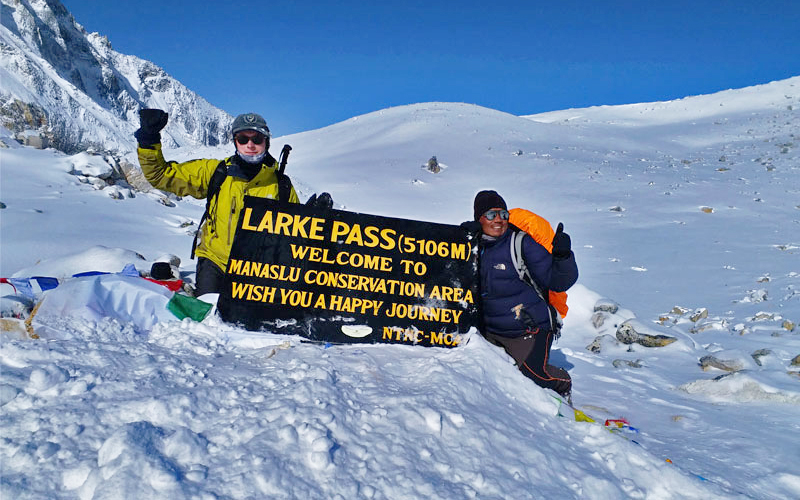
| Highest point | Larkya La Pass, about 5,106 m |
| Highest overnight stay | Dharmasala (Larke Base Camp), about 4,460 m |
| Daily walking | 4–9 hours, mostly 5–8 |
| Accommodation | Teahouses and lodges, twin-share |
| Group size | 1–15 |
| Best seasons | March–May and September–December |
| Price | Standard US$1,485, Budget US$1,050 per person |
Why Beginners Are Drawn to Manaslu
- No technical skills needed. There are no ropes, crampons or climbing.
- Teahouse comfort. You sleep in lodges and eat hot meals each day.
- Fewer crowds. It is quieter than the Everest and Annapurna circuits.
- A guide and porter. A licensed guide is mandatory, and the Standard Plan includes a porter shared between two trekkers.
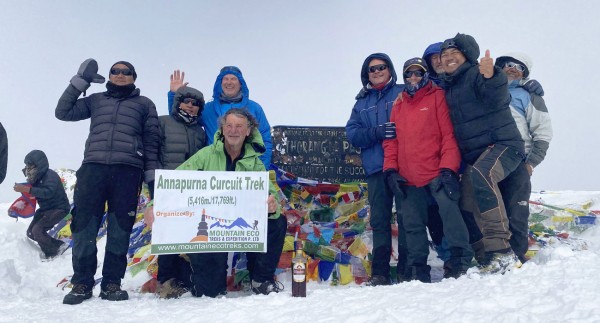
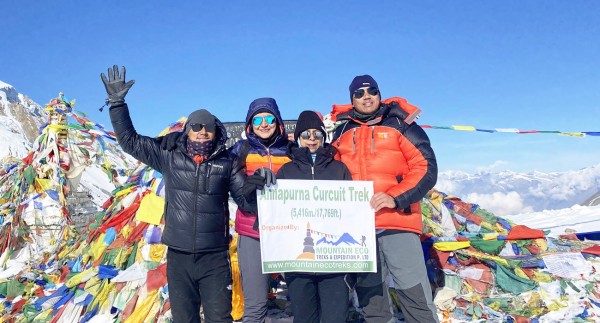
- Lower pass than Annapurna. Larkya La (5,106 m) is more than 300 m lower than Thorong La (5,416 m) on the Annapurna Circuit.
What Makes It Harder Than It Looks
1. A short itinerary means faster altitude gain
An 11-day schedule compresses a route that normally takes 14 days or more. Here is how the height builds:
| Day | Overnight | Elevation |
|---|---|---|
| 2 | Jagat | 1,410 m |
| 3 | Deng | 1,800 m |
| 4 | Namrung | 2,630 m |
| 5 | Sama Gaon | 3,530 m |
| 6 | Sama Gaon (rest day) | 3,530 m |
| 7 | Samdo | 3,860 m |
| 8 | Dharmasala | 4,460 m |
| 9 | Over Larkya La (5,106 m) to Bimthang | About 3,720 m |
| 10 | Tilje | 2,300 m |
The climb from Namrung (2,630 m) to Sama Gaon (3,530 m) gains about 900 m in a single 7–8 hour day. There is just one built-in rest day, at Sama Gaon. That is enough for many healthy trekkers, but beginners may notice altitude effects, so the pace has to stay slow.
2. Long walking days
Most days involve 5–8 hours on rocky, uneven trail, with suspension bridges, landslide-prone sections and steady ups and downs along the Budhi Gandaki River. The distances are real: several days are 19–21 km.
3. Larkya La day
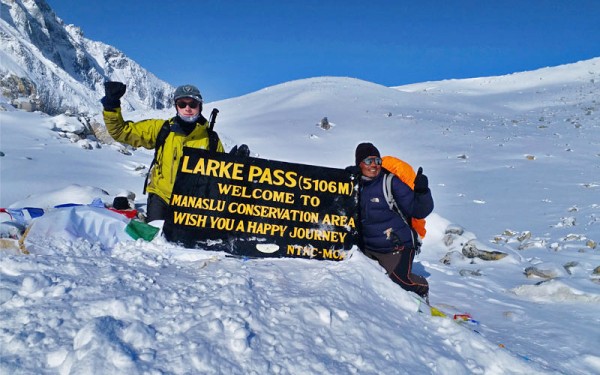
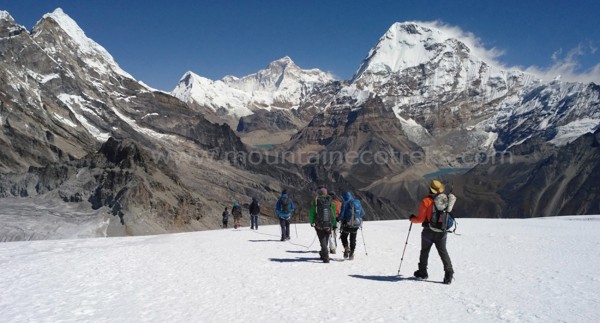
This is the make-or-break day. The itinerary lists 8–9 hours, and other guides report 8–10 hours or more depending on conditions. You start in the dark, climb from 4,460 m to 5,106 m and then descend more than 1,300 m to Bimthang. It is cold, often windy, and tiring on the knees.
4. Remote conditions
Facilities get simpler as you go higher. Expect basic rooms, shared bathrooms, limited Wi-Fi and phone signal that largely disappears above Samagaon. Medical help is a long way away, which is why guides monitor oxygen saturation and pulse daily.
5. Weather
Conditions on the pass can change quickly, and snow can close it in winter. That is why spring and autumn are the best windows.
Beginner Suitability Scorecard
| Factor | Beginner-friendliness |
|---|---|
| Technical difficulty | Very easy (no climbing skills) |
| Daily distance and hours | Challenging |
| Altitude profile | Challenging, because of the short schedule |
| Pass day | Hard |
| Comfort and facilities | Basic teahouse standard |
| Support (guide, porter, permits) | Excellent |
| Overall for true first-timers | Possible, but not ideal |
Who Should (and Shouldn't) Book This Trek?
It is a good fit if you:
- Are healthy and reasonably fit, and enjoy long walks
- Have done multi-day hikes or lower-altitude treks before
- Can commit to 8–12 weeks of training
- Are comfortable with basic lodges and cold nights
- Will listen to your guide and slow down when needed
Consider a different trek first if you:
- Have never hiked more than a day or two in a row
- Have heart, lung or blood-pressure conditions that have not been checked by a doctor
- Are worried about altitude and want a gentler start
Good first steps include the Poon Hill Ghorepani Short Trek, the Annapurna Base Camp Trek or the Everest View Trek. All of them are lower and shorter, and each gives you a feel for walking at elevation.
Should Beginners Choose the Short or the Full Circuit?
Mountain Eco Treks offers 11, 12 and 14-day Manaslu options. For a beginner, a longer plan is usually kinder to your body, because it adds acclimatization time (for example at Samdo) and shortens the toughest days. If your schedule allows, take a look at the full Manaslu Circuit Trek. If you only have 11 days and you are fit, the short version can work, but treat the early days as slowly as you can.
| Short Manaslu Circuit | Full Manaslu Circuit | |
|---|---|---|
| Duration | 11 days | 14 days |
| Acclimatization | One rest day | More time at altitude |
| Daily pressure | Higher | Lower |
| Best for | Fit trekkers with limited time | First-timers and cautious trekkers |
How to Prepare: A Simple 12-Week Plan
1. Weeks 1–4: Build a base. Walk or jog 3–4 times a week, adding one longer hike each weekend.
2. Weeks 5–8: Add hills and weight. Carry a 5–8 kg pack on steep trails, and do stair or step-up sessions.
3. Weeks 9–11: Practise back-to-back long days of 5–6 hours to simulate trek conditions.
4. Week 12: Taper, test your boots and layers, and rest.
Also strengthen your legs and core with squats and lunges, break in your boots, and get a medical check-up before you go.
Tips to Make It Beginner-Friendly
- Go slowly. A steady pace beats a fast start every time.
- Drink 3–4 litres of water a day and avoid alcohol.
- Use the rest day well. A short hike to Birendra Lake is better than lying around.
- Start the pass day early. Leaving in the dark gives you daylight for the long descent.
- Hire the porter and keep your daypack light.
- Bring trekking poles for steep descents.
- Tell your guide early about headache, nausea, dizziness or unusual tiredness.
- Ask your doctor about altitude medication before you travel.
- Add a spare day or two at the end for weather and transport delays.
Permits and Rules (2026)
Manaslu is a restricted area, so you need:
- Manaslu Restricted Area Permit (RAP): USD 100 for the first 7 days (September–November) plus USD 15 per extra day, or USD 75 plus USD 10 per extra day from December to August
- Manaslu Conservation Area Permit (MCAP): About NPR 3,000
- Annapurna Conservation Area Permit (ACAP): About NPR 3,000, used near the end of the route
- A licensed guide, which is legally required
One recent source reports that a March 2026 rule change removed the two-person minimum, but the guide requirement remains. Rules change, so confirm current requirements when you book. Mountain Eco Treks arranges all permits for you.
What Does It Cost?
| Package | Price (per person) | Highlights |
|---|---|---|
| Standard | US$1,485 | Private transport, 2 nights in a 3-star Kathmandu hotel, shared porter, all permits, meals and guide |
| Budget | US$1,050 | Public transport, no Kathmandu hotel, porter on request, permits, meals and guide |
Both packages include a licensed guide, permits, three meals a day on the trek, drinking water, a local SIM card, oximeter checks, a first-aid kit, taxes and a welcome dinner. Insurance, international flights, visa, Kathmandu meals, drinks, showers, Wi-Fi, charging, personal gear and tips are extra. Fixed departures run from 3 October 2026 through to May 2027.
Ready to Take on Manaslu?
If you are fit, curious and willing to prepare, the Short Manaslu Circuit is one of Nepal's most rewarding Himalayan treks. View the full itinerary, dates and prices for the Short Manaslu Circuit Trek, or message the team to talk through whether the short or full circuit suits your experience.
FAQs: Short Manaslu Circuit Trek for Beginners
1. Is the Short Manaslu Circuit Trek suitable for beginners?
It can be, for fit beginners who prepare well, but it is not ideal for complete first-timers. The trek is moderate to challenging, with 5–8 hour walking days, nights above 4,000 m and a long Larkya La crossing. No technical skills are needed. If you have never trekked at altitude, consider a shorter warm-up trek or choose a longer Manaslu itinerary with more acclimatization.
2. How difficult is the Larkya La Pass?
It is the toughest day of the trek. You climb from about 4,460 m to roughly 5,106 m and then descend over 1,300 m to Bimthang, taking 8–9 hours by the itinerary and sometimes longer. The terrain is rocky and can be icy, and the weather can turn cold and windy. It is not technical, but it demands stamina and a very early start.
3. What is the highest altitude on the trek?
Larkya La Pass at about 5,106 m. You may see slightly different heights, such as 5,135 m or 5,160 m, in different sources, but 5,106 m is the most widely used figure. Your highest overnight stay is Dharmasala at around 4,460 m.
4. How many hours do I walk each day?
Usually 5–8 hours. Shorter days include Samdo (4–5 hours) and Dharmasala (4–5 hours), while Namrung to Sama Gaon and the pass day are among the longest. Distances of 19–21 km on several days add up, so a steady pace and regular breaks are essential.
5. How much fitness training do I need?
Aim for 8–12 weeks of regular exercise. Combine hiking, jogging or cycling with leg strength work, and practise long walks carrying a daypack on hills. Include some back-to-back days of 5–6 hours. You do not need to be an athlete, but good cardiovascular fitness makes a big difference at altitude.
6. Is altitude sickness a risk?
Yes, especially because the 11-day schedule has only one rest day. Walk slowly, drink plenty of water, avoid alcohol and report any symptoms to your guide straight away. Your guide will check your oxygen saturation and pulse. Never go higher with worsening symptoms, and ask your doctor about preventive medication before you travel.
7. Do I need a guide and permits?
Yes. Manaslu is a restricted area, so you need a Restricted Area Permit, a Manaslu Conservation Area Permit and an Annapurna Conservation Area Permit, and a licensed guide is mandatory. Permits are issued only through a registered agency. Mountain Eco Treks arranges all of them in your package.
8. What is the accommodation like?
Simple teahouses with twin-share rooms and shared bathrooms. Higher up, rooms are basic and cold, and heating is usually only in the dining room. You can request a down sleeping bag and down jacket from Mountain Eco Treks. Meals include dal bhat, noodles, soups, pasta and eggs, with vegetarian options.
9. What is the best time to go?
Autumn (September to November) and spring (March to May). October usually offers the clearest skies and most stable weather, while spring brings warmer temperatures and blooming rhododendrons. Winter can close the pass with snow, and the monsoon brings rain and landslide risks.
10. How much does the trek cost?
The Standard Plan costs US$1,485 per person and the Budget Plan US$1,050. Both include permits, a licensed guide, meals and accommodation on the trek, and the Standard Plan adds private transport, a Kathmandu hotel and a shared porter. Budget for insurance, visa, international flights, drinks, showers, Wi-Fi, tips and personal gear. You can see current dates on the Short Manaslu Circuit Trek page.
Recent From Blog

19th Apr, 2019


23rd Dec, 2018

11th Jan, 2024

14th Jan, 2024

29th Jan, 2025

11th Feb, 2025

18th Feb, 2025

25th Feb, 2025

5th Apr, 2025
23rd Dec, 2025
9th May, 2026
12th Jul, 2026

13th Aug, 2026
13th Aug, 2026
13th Aug, 2026

16th Aug, 2026
20th Aug, 2026


11th Sep, 2026
24th Sep, 2026